
WELCOME BONUS 300%
UP TO €2000 + 100
FREE SPINS
UP TO €2000 + 100
FREE SPINS
Home → Blackjack
Blackjack at Divas: Variants, Rules and Payouts
Shoe, Cut Card, and 75 Percent Penetration
In Blackjack 6 Decks, the game utilizes a shoe with multiple decks, and a cut card is placed approximately 75% through the shoe. This configuration results in a house edge of 0.46%, with a Return to Player (RTP) of 99.54%. The rules permit doubling on any two cards and doubling after a split, but no option for surrender.
The concept of 75 percent penetration means that roughly three-quarters of the cards in the shoe are played before the deck is reshuffled. This impacts the overall house edge compared to deeper penetration, which would slightly lower the advantage for the casino. For Blackjack 6 Decks, this penetration level is standard for games with a 0.46% house edge.
Understanding shoe penetration is crucial for players aiming to minimise the house edge. A higher penetration rate generally benefits the player by reducing the advantage. In this specific game variant, the 0.46% house edge is a direct consequence of the rules and the penetration level employed, affecting the long-term payout of 99.54%.
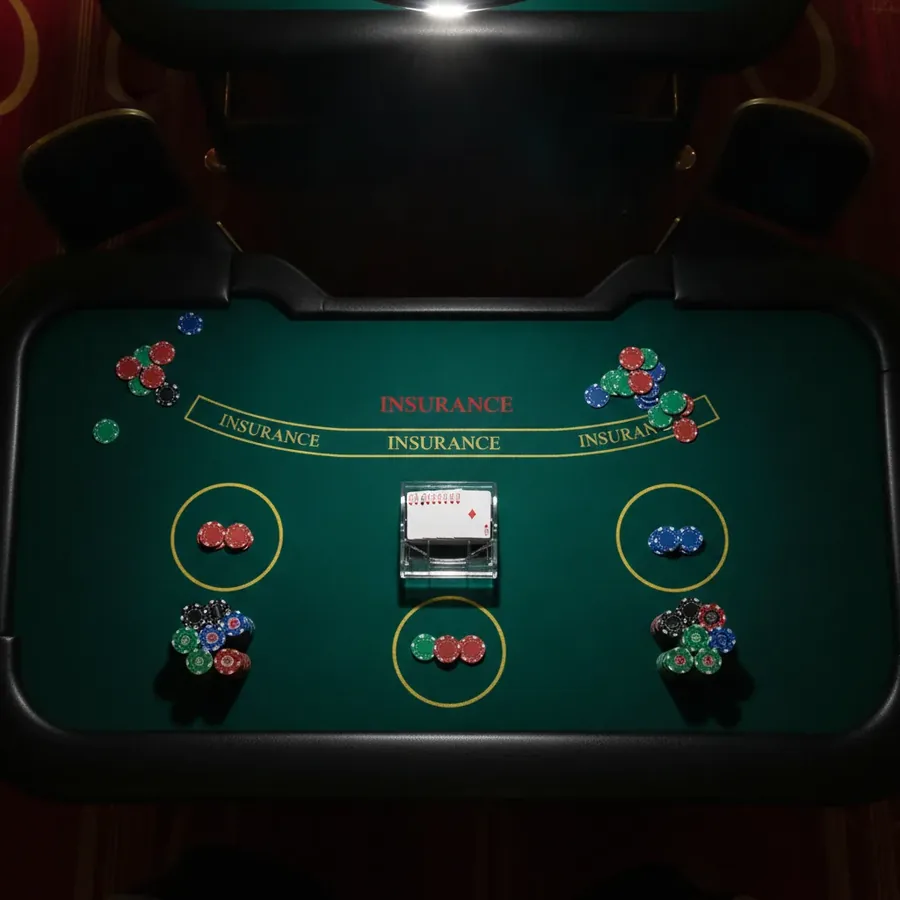
Which table limits suit 20 EUR balance?
For a 20 EUR balance, tables with low minimum stakes are essential, particularly considering that table games contribute only 10% to bonus wagering. For instance, Blackjack Party from Evolution allows stakes from 1.00 EUR to 1,000 EUR, making it accessible. However, the 300% welcome bonus up to €2,000 requires significant turnover, with slots contributing 100%.
Infinite Blackjack, also from Evolution, offers stakes ranging from 1 EUR to 5,000 EUR, providing flexibility for players with a 20 EUR balance. This game includes four side bets: Any Pair, 21+3, Hot 3, and Bust It. The RTP for Infinite Blackjack is 99.47%, but remember that only 10% of your stake contributes to bonus wagering.
Lightning Blackjack, another Evolution offering, permits stakes between 1 EUR and 2,500 EUR and features unlimited players. While its RTP is a high 99.56%, the limited 20 EUR balance means focusing on low-stakes tables is paramount for prolonged play. Wagering the 300% welcome bonus effectively with such a balance requires careful management, especially with the 10% contribution from table games.
What Push Means: Stake Returns to You
A 'Push' in Blackjack occurs when the player's hand total matches the dealer's hand total, excluding a dealer blackjack. In such an event, the player's stake is returned, meaning neither the player nor the casino wins or loses that particular bet. This outcome is distinct from a loss or a win.
For example, in Blackjack 6 Decks with its 0.46% house edge, a push results in a neutral outcome for that round. The payout for a standard win is 1:1, and for a blackjack, it is 3:2, but a push negates these possibilities, effectively returning the original bet amount to the player.
Understanding the 'Push' outcome is fundamental to Blackjack strategy. It prevents the loss of the initial wager, preserving the player's bankroll. This contrasts with side bets like Insurance, which pays 2:1 but has a significantly higher house edge of 7.47% in a 6-8 deck game and is generally advised against.
When can you increase your bet?
Increasing your bet in Blackjack is typically permissible when the rules allow for it, such as doubling down on your initial two cards. In Blackjack 6 Decks, which has a 0.46% house edge, players can double their bet on any two-card hand, provided they receive only one additional card. This option is available before hitting or standing.
Another scenario for increasing a bet is after splitting a pair, known as Double After Split (DAS). This rule, present in Blackjack 6 Decks, allows players to double their wager on one of the new hands formed after a split. The RTP for games featuring DAS is approximately 99.54%, reflecting the player-friendly nature of this rule.
Conversely, increasing your bet is not advisable on side bets like Insurance, which has a substantial 7.47% house edge in 6-8 deck games. The Bonus Terms also influence betting strategy, with a 300% welcome bonus up to €2,000. While table games contribute 10% to wagering, slots contribute 100%, suggesting a strategic shift in betting focus depending on bonus objectives.
Check table limit before the first bet
Before placing any bet, it is essential to verify the table limits, especially with a 20 EUR balance. Blackjack Party, for instance, has stakes ranging from 1.00 EUR to 1,000 EUR. Given that table games contribute only 10% to bonus wagering, understanding these limits is crucial for managing both your balance and bonus turnover.
Infinite Blackjack offers a broader range of stakes from 1 EUR to 5,000 EUR, and Lightning Blackjack accepts bets from 1 EUR to 2,500 EUR. For a 20 EUR balance, opting for the lower end of these ranges, such as the 1 EUR minimum on Infinite Blackjack, is a prudent strategy to extend playtime.
The decision to increase stakes should be informed by the game's contribution to bonus wagering, which is 10% for table games like Blackjack, and 100% for slots. With a 300% welcome bonus up to €2,000, players with a 20 EUR balance must carefully consider table limits to effectively meet wagering requirements without depleting their funds prematurely.
Blackjack variants at a glance
| Variant | Payout | House edge | Rule | Bet range |
|---|---|---|---|---|
| Blackjack Liberal Vegas Strip (liberale Regeln, 3:2) | 99.72% | 0.28% | Günstigste Regelkombination: S17 + DAS + Resplit + Late Surrender. Standardabweichung 1,15 | Blackjack 3:2, Gewinn 1:1 |
| Blackjack Surrender (Late Surrender) – Regel-Effekt | n.a. (Regel-Modifikator) | −0.08 Prozentpunkte | Spieler gibt Hand nach Dealer-Blackjack-Prüfung auf, verliert die Hälfte des Einsatzes. Verbessert RTP um ca. 0.08 Prozentpunkte. Early Surrender ist wesentlich wertvoller (bis −0.6 Prozentpunkte), aber extrem selten. | Rückzahlung 50% des Einsatzes |
| Blackjack Auszahlung 6:5 statt 3:2 (6 Decks) | 98.15% | 1.85% | Ersatz von 3:2 durch 6:5 fügt exakt +1.39 Prozentpunkte zum Vorteil des Casinos hinzu – stärker als jede andere Regeländerung. Bei $10 Einsatz zahlt Blackjack $12 statt $15. | Blackjack 6:5, Gewinn 1:1 |
| Blackjack Ein Deck, klassische Regeln, 3:2 | 99.85% | 0.15% | Weniger Decks = niedrigerer Vorteil; ein Deck gibt ca. −0.48 Prozentpunkte gegenüber 8 Decks. Oft durch 6:5 Auszahlung kompensiert. | Blackjack 3:2, Gewinn 1:1 |
| Blackjack Insurance / Versicherung (6–8 Decks) | 92.53% | 7.47% | Separate Nebenwette bis 50% der Hauptwette, wenn der Dealer ein Ass hat. Basisstrategie schreibt IMMER Ablehnung vor (außer Karten zählen bei True Count ≥ +3). Bei einem Deck Vorteil ≈ 5.88% | Insurance 2:1 |
| Blackjack Split / Double / H17 – Regel-Effekte | n.a. (Regel-Modifikatoren) | H17 +0.22 Prozentpunkte; RSA −0.08 Prozentpunkte; DAS −0.14 Prozentpunkte | Dealer Hits Soft 17 verschlechtert RTP um 0.22 Prozentpunkte; Resplit Aces verbessert um 0.08 Prozentpunkte; Double After Split verbessert um ca. 0.14 Prozentpunkte; 6 Decks statt 8 – ca. 0.02 Prozentpunkte. | Double – Einsatz ×2 mit einer Karte; Split – bis 4 Hände; Ass-Split meist mit einer Karte. |
Step-by-step Split at the Live Table
Players at Evolution's Lightning Blackjack can resplit up to four hands, a feature that can alter the house edge. This option, alongside Double After Split (DAS), can reduce the house advantage by approximately 0.14 percentage points. The standard offering at this live table allows for unlimited players, with stakes ranging from 1 EUR to 2,500 EUR.
The game mechanics facilitate a dynamic split action, allowing for multiple splits per hand, provided the player adheres to the game's specific rules. This flexibility is a key differentiator compared to some RNG-based blackjack variants. The presence of 'Lightning Multipliers' up to 25x on winning hands further distinguishes this live offering.
Understanding the impact of resplitting is crucial for players aiming to optimize their strategy. While the exact RTP for Lightning Blackjack is 99.56%, the strategic advantages or disadvantages of rules like resplitting can influence individual session outcomes. This feature provides an added layer of complexity for experienced players.
How long do 100 EUR last at a 1 EUR table?
At a live table with a 1 EUR bet and an unlimited number of players, such as Infinite Blackjack by Evolution, 100 EUR could theoretically last for 100 rounds if no losses were incurred. This particular game offers an RTP of 99.47% and allows bets up to 5,000 EUR.
However, considering the house edge, which is implicitly present in the RTP, the actual duration would be shorter. For instance, if the house edge is approximately 0.53% (derived from 100% - 99.47%), a player might experience losses over time. The game also features side bets like Any Pair, 21+3, Hot 3, and Bust It.
The theoretical duration of 100 rounds assumes consistent betting and no additional wagers on side bets, which have their own house edges. Blackjack Party, another Evolution offering, has a lower maximum bet of 1,000 EUR but is geared towards entertainment with two hosts, suggesting a more casual play pace.
16 vs 10 played incorrectly: most common error
A common strategic error in blackjack is hitting when holding a 16 against a dealer's 10, especially in games with a 3:2 payout for blackjack. This decision, when made against the optimal strategy, can significantly increase the player's house advantage. The consequences of such an incorrect play are directly tied to the game's specific rules.
For example, in Blackjack Liberal Vegas Strip, which features liberal rules and a 3:2 payout, the house advantage is a mere 0.28%. Incorrectly hitting a 16 against a dealer's 10 would increase this house edge. The optimal strategy for this scenario is to stand, as hitting carries a high risk of busting.
The impact of such a deviation from basic strategy can be substantial over numerous hands. In a game with a 6:5 payout for blackjack, where the house edge is already higher at 1.85%, poor decision-making like this exacerbates the disadvantage. A 6:5 payout means a 10 EUR bet returns only 12 EUR instead of 15 EUR.
Live Table vs RNG Table: Speed and Limits
Live tables, such as Evolution's Lightning Blackjack, offer betting limits from 1 EUR to 2,500 EUR and cater to an unlimited number of players. These tables provide a more social and interactive experience. The pace is dictated by the dealer and the structure of the game, including features like Lightning multipliers.
In contrast, RNG (Random Number Generator) tables, like Blackjack Liberal Vegas Strip, typically offer faster gameplay due to automated shuffling and dealing. The house advantage for this specific RNG variant is 0.28%, with liberal rules and a 3:2 payout.
While RNG tables can be quicker, some live variations like Infinite Blackjack, with its 1 EUR to 5,000 EUR limits and four side bets, offer higher potential stakes and a wider array of betting options. The choice between live and RNG often depends on player preference for speed versus a more engaging, real-time environment.
Statistics display saves the last 100 rounds
Some blackjack variants, particularly those found on RNG platforms, may offer a statistics display that records the outcome of the last 100 rounds. This feature can provide players with a historical overview of game results. For instance, a game like Blackjack 6 Decks, S17, DAS, DOA with a 3:2 payout has an RTP of 99.54%.
Such displays can be useful for players who wish to track patterns or simply monitor their personal performance over a defined period. However, it is important to note that the RTP is a long-term theoretical average and past results do not influence future outcomes in a truly random game. The house edge for this specific game is 0.46%.
Understanding the rules and their impact on RTP is key, regardless of statistical displays. For example, Blackjack Ein Deck with classic rules and a 3:2 payout boasts a high RTP of 99.85%, with a house advantage of just 0.15%. The display of 100 rounds would not alter this underlying probability.
Chose Wrong Table for 5 EUR Bankroll
The Blackjack Insurance side bet has a Return to Player (RTP) of 92.53%, indicating a House Edge of 7.47%. This bet is a separate wager up to 50% of the main bet, offered when the dealer shows an Ace. Basic strategy advises always declining this bet unless card counting indicates a True Count of +3 or higher, where the advantage shifts.
Compared to a standard Blackjack game with an RTP of 99.54% (House Edge 0.46%) and a 3:2 payout, the Insurance bet significantly increases the casino's advantage. For a 5 EUR bankroll, consistently placing the insurance bet would lead to a substantially faster depletion of funds due to its higher house edge.
This higher house edge means that for every 100 EUR wagered on insurance bets over time, an average of 7.47 EUR would be retained by the casino, compared to just 0.46 EUR on optimal blackjack play. Therefore, a 5 EUR bankroll would diminish rapidly if insurance is frequently taken, impacting overall playtime.
Blackjack Party runs with two hosts
Blackjack Party, a live dealer variant offered by Evolution, provides a unique gaming atmosphere with two hosts. This table allows an unlimited number of players, ensuring accessibility for many participants simultaneously. The minimum bet is 1.00 EUR, with a maximum bet of 1,000 EUR.
While the game offers a lively environment, its primary focus is entertainment rather than optimal mathematical play. Standard blackjack rules apply, but the interactive element with two hosts distinguishes it from other live blackjack offerings. The RTP for Lightning Blackjack, another Evolution title, is 99.56%.
Players seeking the most statistically advantageous blackjack variants might find Blackjack Party less appealing than tables with superior rules or lower house edges. However, for those prioritizing social interaction and a party-like setting, it offers a distinct experience alongside the standard casino offerings.
Side Bets don't count towards bonus turnover
The welcome bonus at Divas Casino offers 300% up to €2,000 plus 100 free spins. However, the contribution of different game types to the bonus wagering requirement is varied. Slots contribute 100% to the turnover, while table games contribute only 10%.
Specifically, side bets offered on games like Infinite Blackjack, such as Any Pair, 21+3, Hot 3, and Bust It, do not contribute to the bonus turnover requirement. This exclusion means that any wagering placed on these side bets will not help in releasing the bonus funds or any winnings derived from them.
For a player aiming to clear the bonus, focusing bets on slots or standard table game play is essential. For example, to meet a €1,000 wagering requirement with table games alone, a player would need to wager €10,000 due to the 10% contribution. Bets on side bets would not reduce this amount at all.
Insurance vs Even Money on Own Blackjack
Blackjack Insurance is a side bet offered when the dealer's upcard is an Ace. It pays 2:1 if the dealer has a blackjack. While it offers a quick payout, its RTP is 92.53%, making it statistically disadvantageous in the long run compared to other blackjack bets.
An 'Even Money' option is sometimes offered to players who have a natural blackjack when the dealer shows an Ace. This pays 1:1 on the player's blackjack, effectively securing a win rather than risking a push if the dealer also has blackjack. This is different from the Insurance bet.
The standard payout for a blackjack is 3:2, meaning a 10 EUR bet wins 15 EUR. Taking Even Money on a blackjack would result in a 10 EUR win, whereas declining it and the dealer not having blackjack would result in a 15 EUR win. The Insurance bet, however, is a separate wager against the dealer's potential blackjack.
Why Loss Progression Quickly Reaches Table Limit
Certain table game rules can lead to rapid losses, especially when combined with progressive betting strategies. For instance, Blackjack Auszahlung 6:5 statt 3:2 (6 Decks) has an RTP of 98.15%, meaning a higher house edge of 1.85% compared to a 3:2 payout game.
A 6:5 payout on a 10 EUR bet yields 12 EUR, whereas a 3:2 payout yields 15 EUR. This difference of 3 EUR per winning hand is substantial. When a player employs a loss progression strategy, these smaller payouts on winning hands, combined with potential losing streaks, accelerate the depletion of their bankroll.
If a player were to use a strategy like the Martingale on a table with a 1.85% house edge and a 6:5 payout, doubling their bet after each loss, they could quickly reach the table limit. For example, a sequence of losses followed by smaller wins would necessitate increasingly larger bets, making a rapid approach to the maximum bet amount likely.
Contact
Live - online chat
Banking









Providers












Divas Casino 2026